
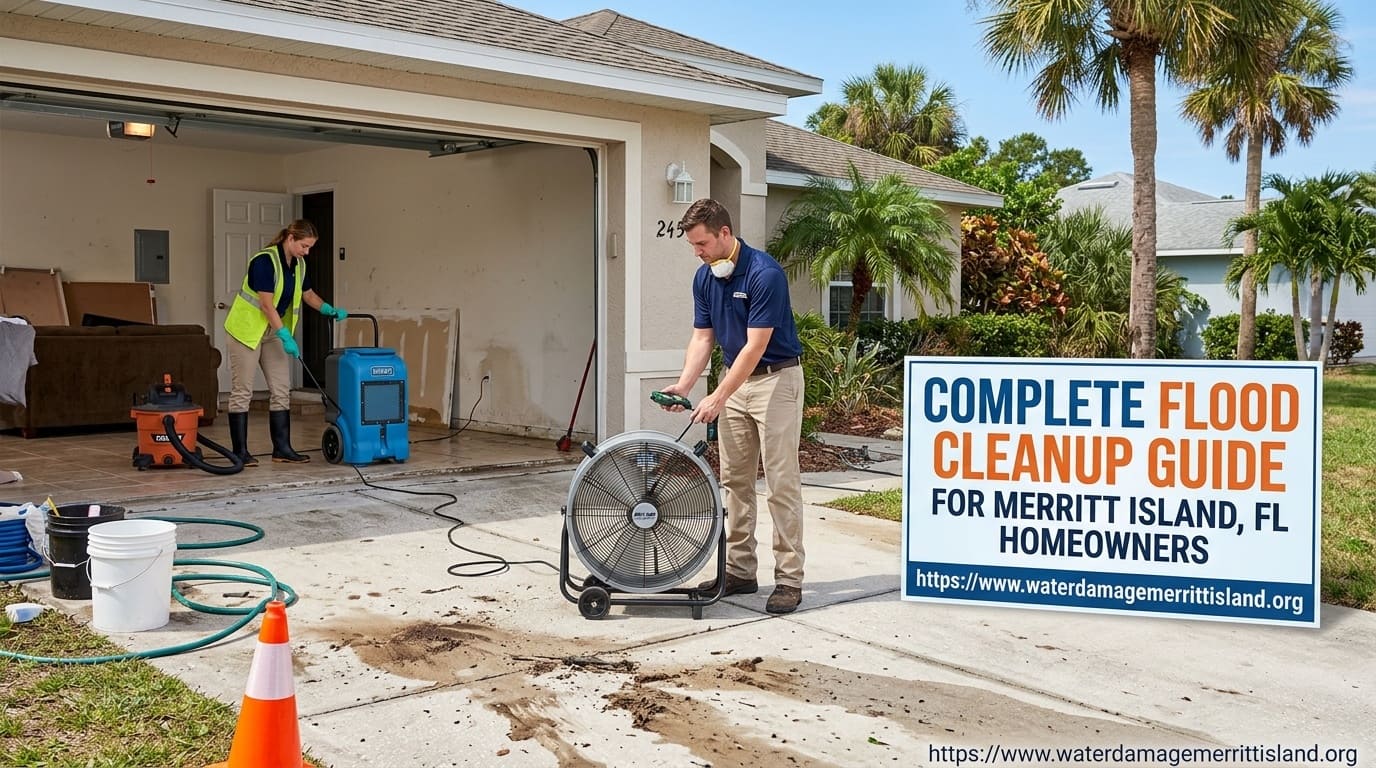
Complete Flood Cleanup Guide for Merritt Island, FL Homeowners
Flooding on Merritt Island, FL can come from tropical rain, storm surge influences, overloaded drains, appliance failures, or plumbing breaks. Whatever the source, the first hours decide how much of your home you keep. This complete cleanup guide walks Merritt Island homeowners through safety, documentation, extraction, drying, sanitation, and rebuild decisions with local climate realities in mind.
Flood cleanup is not one chore. It is a sequence. Skip a step and you often pay for it later in warped floors, swollen cabinets, or mold behind baseboards. The goal of this guide is to give you a clear order of operations so you can protect people first, protect the structure second, and rebuild only when the house is truly dry.
Water Damage Merritt Island, FL is available 24/7 at (321) 323-1442. If water is more than a shallow clean spill, call for emergency water damage help in Merritt Island, FL while you complete the safety steps below.
Understand the Kind of Water You Are Facing
Not all floodwater is equal. Clean water from a supply line is different from rain that entered through a door, and both are different from sewage or drain backup. The category affects what can be cleaned, what should be discarded, and how aggressive sanitation needs to be.
On Merritt Island, outdoor floodwater can pick up soil, fertilizer residue, and debris before it enters a garage or living room. Even when the water looks relatively clear, treat outdoor intrusion with caution. If you smell sewage or see toilet or drain contents, keep people and pets out and call professionals immediately.
Knowing the source also helps insurance conversations. A burst pipe, a dishwasher failure, and a tropical rain event may follow different claim paths. Document what you know as soon as you can.
Step 1: Protect People Before Property
Evacuation and hazards
Get everyone out of rooms with deep water, collapsed ceilings, or gas odors. Keep children and pets away from floodwater. Wear boots and gloves if you must cross shallow water. Do not use elevators in multi story buildings that flooded.
Watch for floating debris, nails, and slippery surfaces. Floodwater can hide floor transitions and open cavities. If anyone has cuts or feels ill after contact with contaminated water, seek medical advice.
Utilities
Shut off electricity at the main breaker only if you can do so without standing in water. Turn off the main water valve if a pipe is still feeding the flood. If you smell gas, leave and call the utility from outside. Safety always beats saving a sofa.
Once power is safely controlled, avoid plugging heaters or fans into outlets that were submerged until a qualified person checks them. Electrical damage after floods is easy to underestimate.
Step 2: Call for Help and Document the Loss
Contact Water Damage Merritt Island, FL for extraction dispatch across Merritt Island, FL. Then open an insurance claim. Photograph every room from multiple angles, including water lines on walls, damaged contents, and the suspected source if visible. Write down when flooding started and whether the water was clean, gray, or sewage related.
Take both wide shots and close ups. Capture serial numbers on major appliances if they were affected. Keep a simple list of wet rooms so nothing is forgotten when you talk with the adjuster later.
For storm related losses, keep the storm name and date with your photos. Our hurricane season prep guide covers longer term storm readiness before the next event.
In Merritt Island, mold risk climbs quickly after floods. The goal of day one is not perfect cleanup. The goal is safe extraction, airflow, and a drying plan under professional monitoring.
Water Damage Merritt Island, FL
Step 3: Remove Standing Water Fast
Shop vacuums help with small clean water leaks. Storm floods and contaminated water usually need truck mounted or portable extractors. Wet carpet pad often cannot be saved after dirty floodwater. Hardwood may cup or buckle if left wet under coastal humidity.
Our flood restoration service in Merritt Island, FL prioritizes highest volumes first, then moves to wall cavities, crawl spaces, and mechanical rooms. Avoid using household fans alone as your full strategy. Without dehumidification, fans can spread humid air and contamination.
If water is still entering from outside, temporary barriers and debris clearing can reduce the load while extraction continues. Stopping the source and removing volume at the same time shortens the overall dry out.
Step 4: Move Contents and Open Airflow Paths
Lift undamaged furniture onto blocks or move it to dry rooms. Remove rugs and small wet items that block drying. Open closet doors and cabinet doors so air can reach wet surfaces once equipment arrives. Do not carry heavy waterlogged materials yourself if they may collapse.
Ask for an inventory list of discarded and salvaged items for insurance. Clear communication on day one reduces claim confusion later for Merritt Island, FL property owners.
Be careful with particle board furniture and soaked books or papers. Some items can be staged for cleaning decisions later. Others become health or odor problems if left in the work area. Your crew can help separate salvageable contents from disposal piles.
Step 5: Structural Drying and Moisture Monitoring
By the end of the first day, standing water should be gone and drying equipment should be running. Technicians record baseline moisture readings. You may need to leave doors open within contained zones and keep AC running if the system is safe. Do not shut equipment off overnight to save electricity. That pause can erase progress in local humidity.
Expect several days of monitoring on many Merritt Island floods. Slab homes can hide moisture at edges and under flooring systems. Baseboards may need temporary removal. In some cases lower drywall comes out so insulation and studs can dry completely.
Learn what to inspect in the following weeks in why mold spreads fast after water damage in Merritt Island, FL. If odors appear quickly, tell your crew so they can open additional cavities. Full water damage restoration service continues until materials meet dry standards and rebuild can begin.
Step 6: Clean, Sanitize, and Decide What to Keep
Water categories matter
Clean supply line water differs from storm water or sewage. Treating contaminated water like a simple mop job creates health risks later. Hard surfaces can often be cleaned. Porous materials soaked in dirty floodwater frequently need removal.
Mold prevention
Do not paint or seal wet surfaces. Do not assume a dry looking floor means the structure is dry. If growth appears, professional mold remediation in Merritt Island, FL uses containment and HEPA filtration rather than casual scrubbing.
Contents decisions
Soft goods, carpet pad, and swollen cabinets are common losses after floods. Metal, glass, and many hard plastics clean more successfully. Keep photos of discarded items. That record matters when the claim is reviewed weeks later.
Room by Room Flood Cleanup Notes for Merritt Island Homes
Garage and laundry
Garages often take the first water during storms. Laundry rooms connected to the garage can pull that moisture into living space. Check under washers, around water heaters, and at the door threshold. Elevate stored cardboard and keep future storage off the slab when possible.
Kitchen
Toe kicks, dishwasher cavities, and lower pantry shelving trap moisture. Even a few inches of water can ruin particle board. Photograph every cabinet before removal and ask about rebuild materials that handle humidity better.
Bathrooms
Vinyl and tile may hide wet underlayment. Soft vanity bases and musty linen closets are frequent follow up issues. Exhaust fans help after cleanup, but they do not replace dehumidification during the dry out.
Living areas and bedrooms
Move furniture away from wet walls. Check behind dressers and under beds for damp carpet or pad. Closets against exterior walls deserve extra attention because airflow is usually weak.
Flood Cleanup Do and Do Not List
Do
- Prioritize safety and professional extraction
- Document thoroughly for insurance
- Remove wet contents that block drying
- Follow technician guidance on equipment placement
- Ask about mold prevention steps for Merritt Island humidity
- Keep AC running when the system is safe and recommended
- Save claim related receipts and photos in one folder
Do not
- Use electrical devices in standing water
- Throw away all damaged items before photos if avoidable
- Paint or seal wet surfaces
- Assume fans alone finished the job
- Delay calling overnight during active flooding
- Live in rooms with sewage contamination before proper cleaning
Insurance Tips During Flood Cleanup
Call your carrier early and ask what documentation they want. Moisture logs from a professional restoration company often support the claim better than verbal descriptions. Keep notes on when water started, when extraction began, and when drying equipment was placed.
If you need temporary housing or temporary repairs, ask what your policy allows before spending. Every policy differs. Clear communication prevents surprise denials later for Merritt Island, FL homeowners.
After Cleanup: Rebuild With the Next Storm in Mind
Drying often continues for several days. Moisture readings guide when demolition stops and rebuild starts. Ask about moisture resistant materials in flood prone rooms and better flashing where water entered. A restored Merritt Island home should not only look finished; it should shed the next heavy rain more effectively.
Consider better door thresholds, extended downspouts, sealed garage transitions, and attic ventilation checks after storm related floods. Small upgrades during rebuild can reduce the chance of a repeat claim.
Flooding does not wait for business hours. Water Damage Merritt Island, FL answers around the clock. Call (321) 323-1442, email info@waterdamagemerrittisland.org, or use our contact form to request help.
Frequently Asked Questions
How long does flood drying take in Merritt Island?
Many losses need several days of monitored drying. Timeline depends on water volume, materials, and indoor humidity. Coastal conditions often mean longer equipment time than homeowners expect.
Should I throw everything away after a flood?
Not always. Salvage decisions depend on water category and material type. Photograph first, then follow professional and insurer guidance.
Can I stay in the house during cleanup?
Sometimes yes for limited clean water losses, and sometimes no when contamination, heavy demolition, or unsafe utilities are involved. Ask the crew for a room by room recommendation.
What if floodwater returns during another rain band?
Call immediately. Re saturation resets drying progress. Temporary protection and faster re extraction help limit secondary damage.
When should mold remediation be added to flood cleanup?
If visible growth appears, odors persist after drying, or contaminated water soaked porous materials, professional mold work may be needed. Do not wait for growth to cover large wall areas before calling.
About the Author
Water Damage Merritt Island, FL provides 24/7 emergency water extraction, flood restoration, mold remediation, and full water damage restoration across Merritt Island, FL. Call (321) 323-1442 or visit our contact page.
More reading: Hurricane Season Water Damage Prep for Merritt Island, FL Homes (2026 Guide) and Why Mold Spreads Fast After Water Damage in Merritt Island, FL.